
One track. More time to examine what matters.
A full-day summit includes panels and working discussions focused on one track. The event brief identifies the business issue and intended audience.
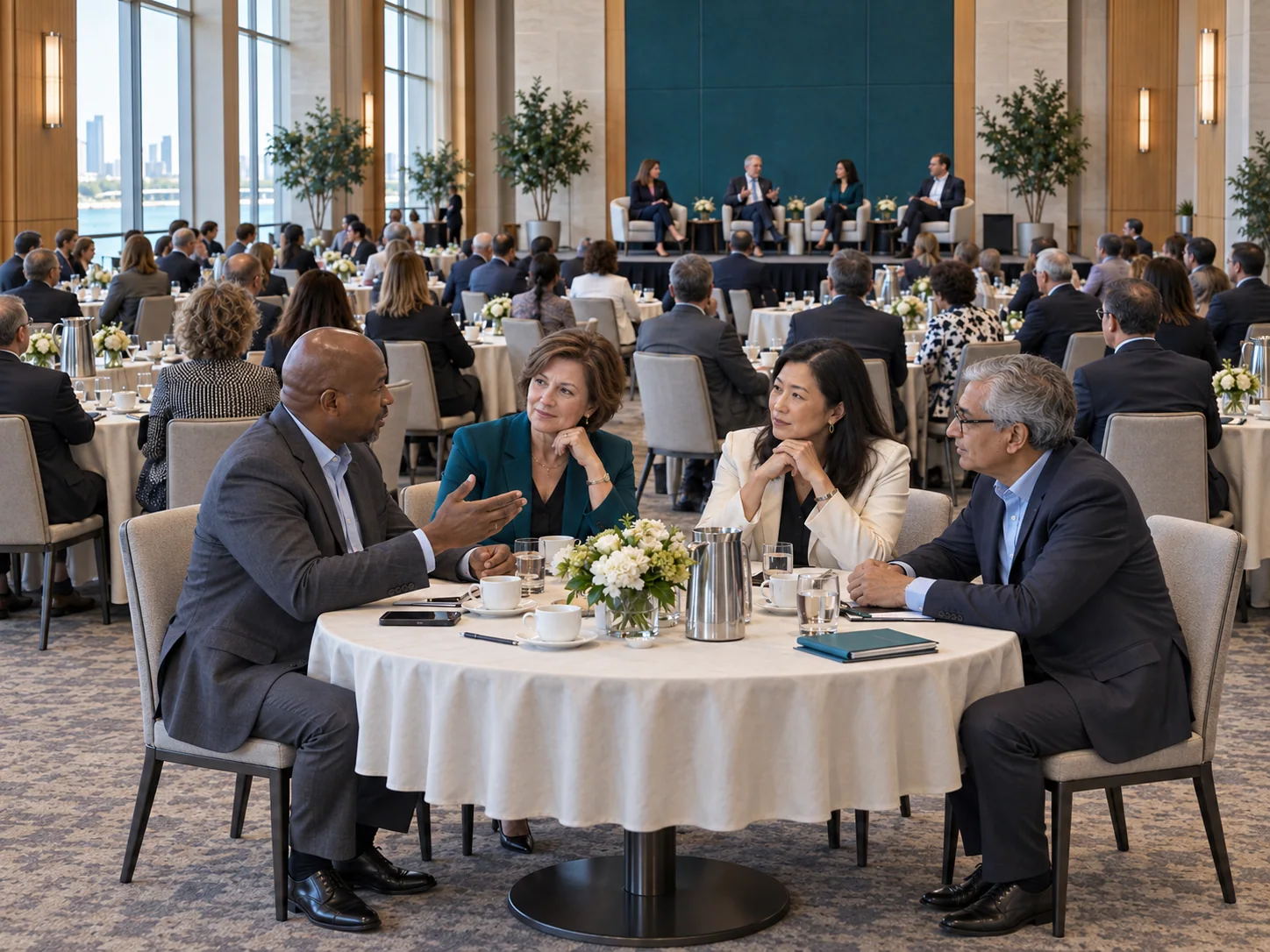
When a full-day summit fits
A full-day summit makes sense when a question needs several views and time for group discussion.
More time for one important question
Check the event brief for its agenda, venue, times and participation requirements.
Panels bring different views. Smaller discussions give leaders time to compare their experience.
How a full-day summit works
Each event has its own agenda. This shows how the format can support the work.
01
Set a shared question
Define what leaders need to think through.
02
Bring more than one view
Moderated panels and participant discussions test assumptions.
03
Close with the open decisions
Leave with what to explore, verify or test next.
Check the summit topic and audience
Review the event brief to decide whether the discussion fits your work.
- 01
Is the leadership question connected to a decision I own or have experience with?
- 02
Does the audience bring perspectives I can learn from, rather than only people selling solutions?
- 03
Is it clear how I can contribute and what follows after the exchange?
Full-day summit events
Find upcoming full-day summits and past events. Each summit has its own question, audience and agenda.
Upcoming exchanges
Confirmed full-day summit dates and locations will appear in the event listings.
Past exchanges
Past full-day summits will appear in the event archive once their original details are verified.
Ask about a full-day summit
Describe the issue that needs a full day, the leaders who should take part and whether you are interested in participating, contributing or sponsoring.